Discussion, Analysis & Findings about Ethical use of AI tools in Education
Question: Do respondents think AI-tools make it easier for students to cheat on assignments and exams?
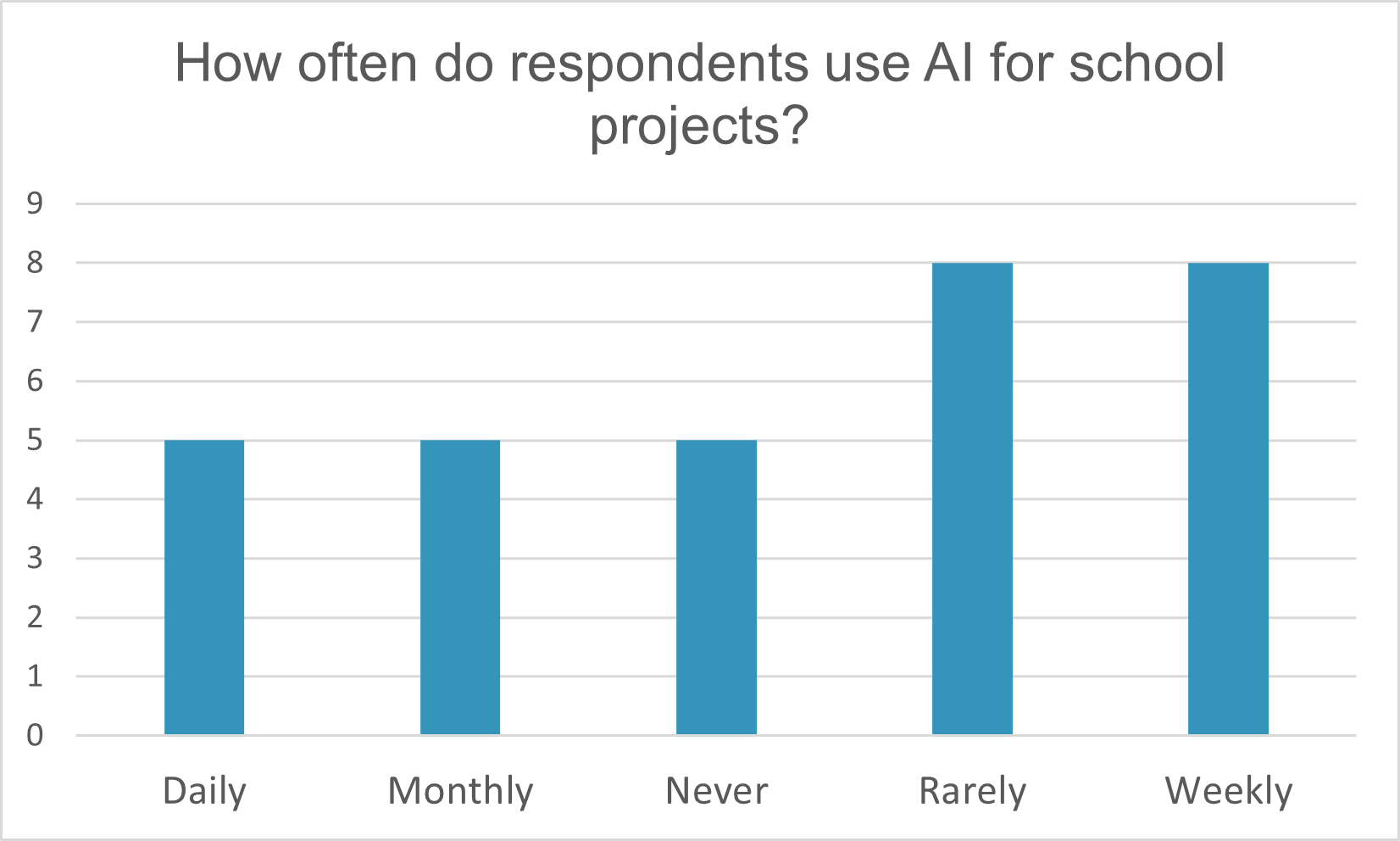
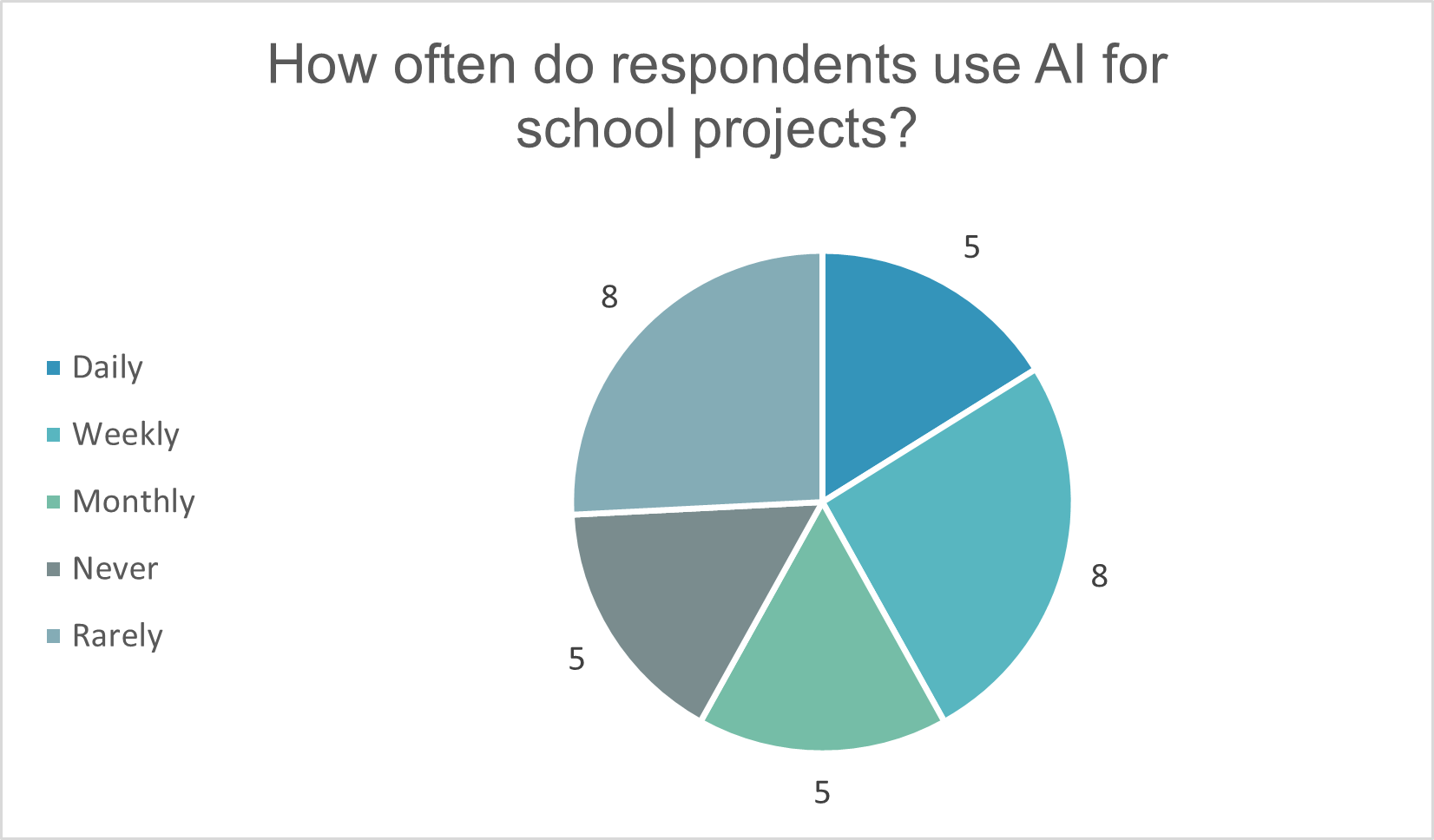
16% of respondents use AI for school daily; 16% of respondents use AI monthly for school projects; 16% of respondents never use AI for school projects; 26% of respondents rarely use AI for school projects; 26% of respondent’s weekly use AI for school projects.
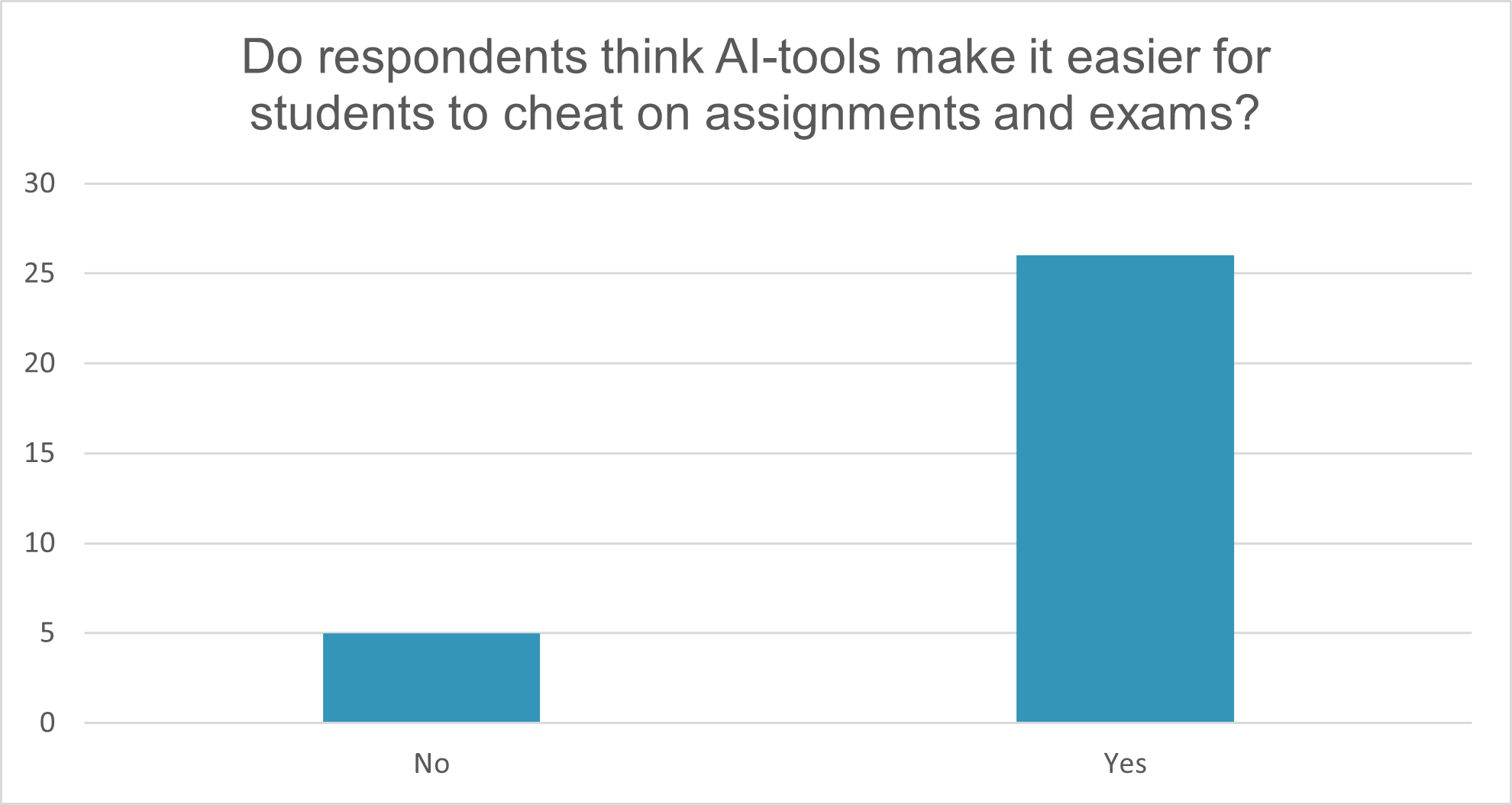
Question: Do respondents think AI-tools make it easier for students to cheat on assignments and exams?
16% of the respondents do not think AI-tools make it easier for students to cheat on assignments and exams; 84% of the respondents do think that AI makes it easier to cheat on assignments and exams.
Question: According to respondents, the biggest advantages of using AI in education is?
32% of respondents think that Personalized learning is the biggest advantage of AI in education; 52% of respondents think that Faster Feedback is the biggest advantage of AI in education; 16% of respondents think that accessibility is the biggest advantage of AI in education.

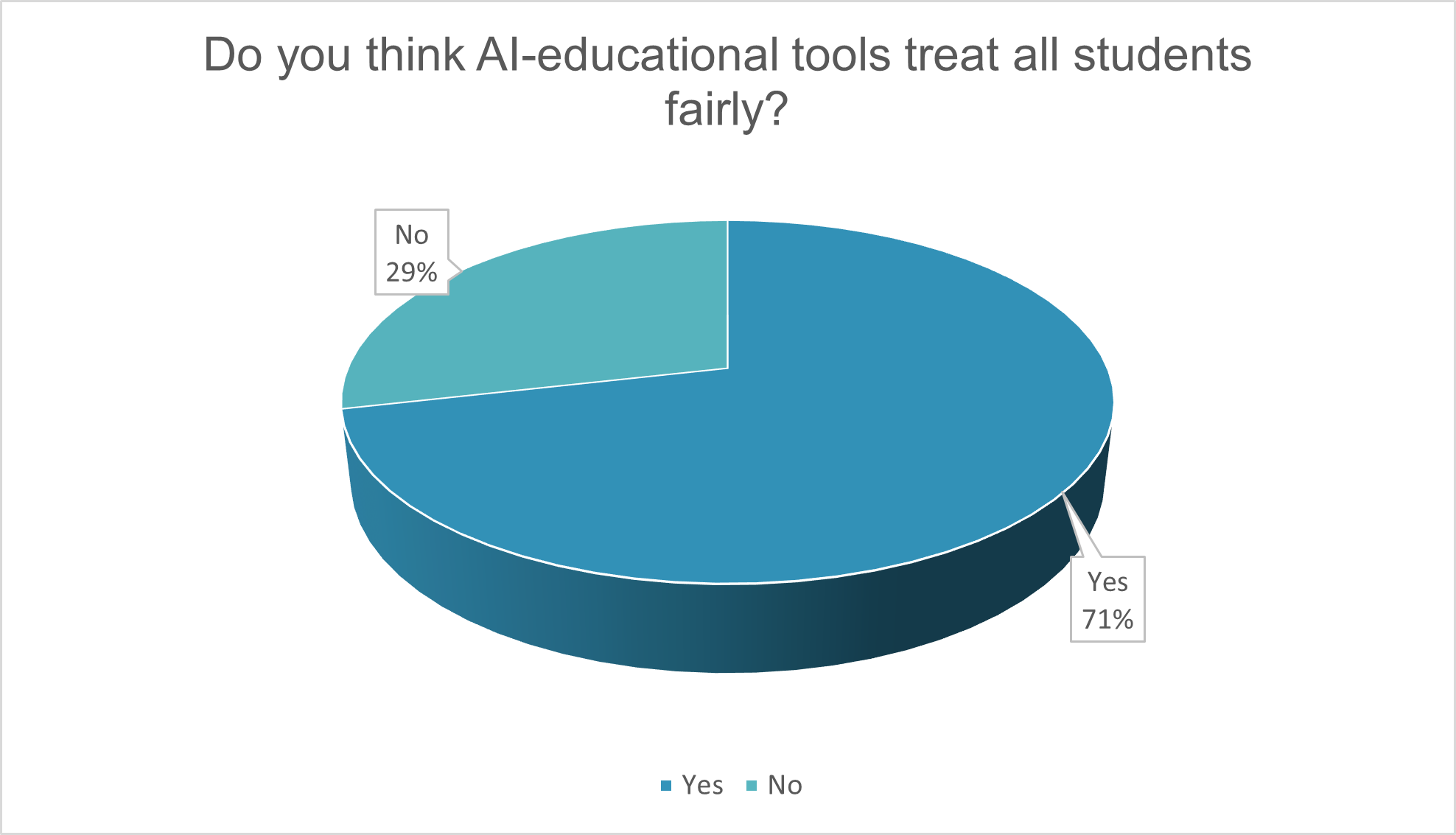
Question: Do you think AI-educational tools treat all students fairly?
71% of respondents believe that AI-educational tools treat learners fairly. Several factors could contribute to this perception, including:
- Consistency in grading and feedback – AI tools often follow predefined criteria, reducing subjective biases that human educators might unintentionally introduce.
- Objective assessments – Automated grading systems rely on set algorithms, making them predictable and transparent compared to human grading, which can vary.
- Scalability and inclusivity – AI in Education can provide learning resources in different languages, formats, and accessibility-friendly designs, creating a more inclusive educational environment.
- Equal access to learning support – AI-powered education platforms can offer personalized assistance to all learners, regardless of their background or skill level.
- That said, the remaining 29% may have concerns about limitations, such as AI struggling to account for creativity, context, or personalized emotional support.
Question: Do you think there should be stricter regulations on how AI is used in education?
The majority of respondents believe that stricter regulations are to be implemented with 18 of the 31 respondents responding “Yes” to the question. Many respondents possibly advocate for stricter AI regulations in education due to concerns about academic integrity, data privacy, and fairness.
The reasoning behind this could include:
- Preventing academic dishonesty or cheating: AI tools can make it easier for students to generate assignments without genuine effort, raising concerns about plagiarism and learning quality.
- Protecting learner personal data: AI-powered platforms often collect vast amounts of personal data, raising concerns about security and privacy.
- Clarifying institutional policies: Many schools and universities lack clear guidelines on AI in education use, leading to confusion and inconsistent enforcement.
- Maintaining human oversight: AI should complement, not replace, human educators. Stricter regulations can ensure that AI remains a supportive tool rather than an unchecked influence